Stainless steel tables have long been a staple in various industries, from commercial kitchens to laboratories, due to their durability, hygiene, and aesthetic appeal. As a trusted supplier of stainless steel tables, I often get asked the question: “How long does a stainless steel table last?” In this blog post, I’ll delve into the factors that influence the lifespan of a stainless steel table and provide you with some insights to help you make the most of your investment. Stainless Steel Table
Understanding the Basics of Stainless Steel
Stainless steel is an alloy composed mainly of iron, chromium, and nickel, with other elements added in smaller quantities to enhance specific properties. The chromium in stainless steel forms a thin, invisible layer of chromium oxide on the surface, which acts as a protective barrier against corrosion. This passive layer is self – healing, meaning that if it is scratched or damaged, it can reform in the presence of oxygen, maintaining the table’s resistance to rust and stains.
Factors Affecting the Lifespan of a Stainless Steel Table
Quality of the Stainless Steel
The grade of stainless steel used in the table is one of the most critical factors determining its lifespan. There are different grades of stainless steel, each with its own unique composition and properties. For example, 304 stainless steel is a common grade used in many applications, including food service and general – purpose tables. It contains 18% chromium and 8% nickel and offers good corrosion resistance. On the other hand, 316 stainless steel, which contains molybdenum in addition to chromium and nickel, provides even better resistance to corrosion, especially in harsh environments such as marine or chemical – laden settings. A higher – grade stainless steel table will generally last longer, as it is more resistant to the elements that can cause degradation.
Manufacturing Process
The way a stainless steel table is manufactured also plays a significant role. A well – made table will have proper welding, smooth edges, and a uniform finish. Poor welding can create weak points where corrosion can start, while rough edges can be more prone to damage and rust. Additionally, a table that is fabricated with precision and attention to detail will be more structurally sound and less likely to develop issues over time. At our company, we use state – of – the – art manufacturing techniques to ensure that each stainless steel table meets the highest standards of quality.
Usage Conditions
The environment in which the stainless steel table is used has a major impact on its lifespan. In a clean, indoor environment such as an office or a light – use kitchen, a stainless steel table can last for decades. However, if the table is exposed to harsh chemicals, high humidity, extreme temperatures, or physical abuse, its lifespan can be significantly shortened. For instance, in a commercial kitchen, the table may be exposed to acidic foods, cleaning agents, and constant use. In a laboratory, it may come into contact with corrosive chemicals. Regular maintenance becomes crucial in these challenging environments to extend the table’s life.
Maintenance and Care
Proper maintenance and care can greatly increase the lifespan of a stainless steel table. Regular cleaning with a mild detergent and a soft cloth can remove dirt, grime, and stains, preventing them from causing damage to the surface. Avoid using abrasive cleaners or scrubbers, as they can scratch the protective passive layer. It’s also important to dry the table thoroughly after cleaning to prevent water spots and rust. In addition, if the table is scratched or damaged, it should be repaired promptly to prevent corrosion from setting in.
Typical Lifespan of a Stainless Steel Table
Under normal usage conditions and with proper maintenance, a high – quality stainless steel table can last anywhere from 15 to 30 years. In light – use environments, such as home kitchens or offices, a stainless steel table can potentially last even longer, up to 50 years or more. However, in more demanding commercial or industrial settings, the lifespan may be closer to the lower end of the range, around 15 – 20 years.
Case Studies
Let’s take a look at a couple of real – world examples. A local restaurant that purchased our stainless steel prep tables about 20 years ago is still using them today. The tables are cleaned daily and have been well – maintained over the years. Despite the constant use in a busy kitchen environment, they show only minimal signs of wear and tear. The restaurant owner attributes the long lifespan of the tables to the high – quality stainless steel used and the regular maintenance.
On the other hand, we had a client in a chemical plant. They initially purchased lower – grade stainless steel tables for cost – saving reasons. Due to the exposure to corrosive chemicals, the tables started showing signs of rust and degradation within 5 years. They had to replace the tables with higher – grade 316 stainless steel tables, which have since been performing well and are expected to last for many more years.
Extending the Lifespan of Your Stainless Steel Table
Regular Inspections
Conduct regular inspections of your stainless steel table to check for any signs of damage or corrosion. Look for scratches, dents, or discoloration. Early detection of problems allows you to take corrective action before they become more serious.
Correct Cleaning Products
Use only cleaning products that are specifically designed for stainless steel. Avoid products that contain chlorine or other harsh chemicals, as they can damage the protective layer. There are many gentle, stainless – steel – friendly cleaners available on the market.
Protective Measures
If you’re using the table in a harsh environment, consider using protective measures. For example, you can use cutting boards or mats to prevent scratches on the table surface. In a chemical – prone area, use chemical – resistant coatings or covers.
Conclusion
In conclusion, the lifespan of a stainless steel table depends on several factors, including the quality of the stainless steel, the manufacturing process, usage conditions, and maintenance. By choosing a high – quality stainless steel table and taking proper care of it, you can expect it to serve you well for many years.
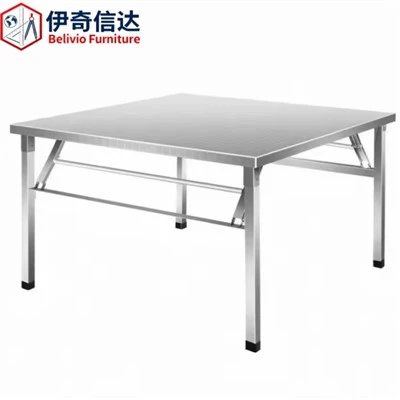
As a supplier of stainless steel tables, we are committed to providing our customers with the highest – quality products that can withstand the test of time. Whether you’re looking for a table for a commercial kitchen, a laboratory, or any other application, we have the expertise and the range of products to meet your needs.
Mobile Pedestal If you’re interested in purchasing stainless steel tables or have any questions about our products, don’t hesitate to reach out to us. Our team of experts is ready to assist you in selecting the right table for your specific requirements and to guide you on how to get the most out of your investment. Contact us today to start a procurement discussion and find the perfect stainless steel table for your business.
References
- “Stainless Steel: Properties, Processing, and Applications.” ASM International Handbook Committee.
- “Corrosion Resistance of Stainless Steel Alloys.” NACE International.
- “Best Practices for Maintaining Stainless Steel Surfaces.” NSF International.
Luoyang Belivio Furniture Co., Ltd.
As one of the most professional stainless steel table manufacturers in China, we have world-leading production equipment and strong manufacturing capabilities. Welcome to buy high-end stainless steel table for sale here from our factory. Quality products and reasonable price are available.
Address: A7-4-601, Hundsun Science and Technology Park, Luolong District, Luoyang City, Henan Province, China
E-mail: belivio@toda.group
WebSite: https://www.beliviofurniture.com/
