Hey there, let’s cut through the confusion about particle board—because if you’ve ever wandered a home improvement store, stared at a cheap desk, or rolled your eyes at “engineered wood” labels, you’ve probably wondered: what even is this stuff? As a particle board supplier, I get so many questions from contractors, DIYers, and interior designers alike, so today I’m breaking it down straight—no fancy jargon, no vague marketing fluff, just real talk about what particle board actually is, how it’s made, why it’s way more than the budget throwaway people make it out to be, and when it’s a smart pick (and when it’s not). Particle Board
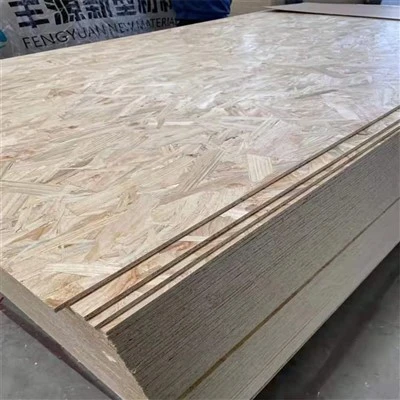
First off, let’s kill the myth that particle board is just “leftover wood glued together.” Yeah, technically that’s true, but it’s way more controlled than you might think. Let’s start with the basics: particle board is a type of engineered wood panel, made from small wood particles (sawdust, wood chips, shavings, even post-industrial wood waste like sawmill trim or pallet offcuts) that get mixed with a resin binder, then pressed into solid, flat panels under high heat and pressure. Wait, hold up—before you scroll past thinking, “That sounds flimsy,” let’s stop and compare it to solid wood. Solid wood has natural knots, grain inconsistencies, and can warp, shrink, or expand with humidity changes. Particle board? It’s engineered to be consistent, which is huge for manufacturing.
Now, let’s get into how it’s actually made, because that’s where a lot of the mystery comes from. First, we source the raw material—no, we don’t send teams to chop down trees specifically for particle board. Most of our raw material is clean, untreated wood waste from lumber mills, furniture factories, and even urban tree trimming (we process branches into tiny, uniform particles). We sort that to make sure there’s no dirt, metal, or other gunk that would mess with the final product. Next, we mix the particles with resin—usually urea-formaldehyde, but we also offer formaldehyde-free options for people worried about air quality. The mix ratio is specific, too: too little resin and the board will fall apart, too much and it’ll be brittle. Then comes the pressing part: we spread the particle-resin mix into a thin, even mat, then press it for minutes at a time with tons of pressure (think thousands of pounds per square inch) and heat. That heat cures the resin, so it binds the particles permanently. The end result is a dense, uniform panel that’s flat, stable, and way more consistent than solid wood.
Wait, but why does everyone rag on particle board? Oh right, because of the cheap stuff you find at big-box stores for $20 desk tops. That’s low-density particle board, made with larger particles and less resin, meant for one-off, temporary projects. But not all particle board is created equal—seriously, that’s a key point I wish more people knew. There are different grades, and they’re made for totally different uses. Let’s break down the main grades we supply, since that’s what our customers ask about nonstop:
-
Low-density particle board: This is the budget stuff, right? It’s light, has a rough surface, and doesn’t hold screws well. You’ll find this in disposable furniture, craft projects, or maybe underlayment for flooring (but even that’s a stretch for most people). It’s not meant to take heavy loads, so if you’re building a bookshelf that holds 50lbs of textbooks, this is not your call.
-
Medium-density particle board (MDP): Wait, hold on—sometimes people mix up MDP with MDF (medium-density fiberboard), but they’re not the same. MDP has larger particles than MDF, so it’s a little rougher, but it’s way stronger than low-density. This is the workhorse grade. It holds screws way better, it’s denser, and it’s perfect for things like cabinet boxes, interior walls, shelving that’s not going to be outside, and office furniture. We sell a ton of this to contractors building custom kitchen cabinets because it’s consistent and doesn’t warp like solid pine can do in a humid kitchen.
-
High-density particle board: This is the heavy lifter. We make this for structural uses, like load-bearing shelving, subflooring in areas that get a lot of foot traffic, or even trailer walls. It’s super dense, holds screws like crazy, and can handle way more weight than you’d think. A lot of people don’t realize that high-density particle board is used in commercial construction all the time because it’s cheaper than plywood and just as strong for certain jobs.
-
Formaldehyde-free particle board: This is a big one lately, because more people are worried about off-gassing, especially for nurseries or people with asthma. We offer this grade that uses a soy-based resin instead of urea-formaldehyde, so it has zero harmful fumes. It’s a little more expensive, but not by much, and it’s a game-changer for residential projects where air quality is top priority.
Now, let’s get real about the pros and cons, because I don’t want to sell you something that’s not right for your project. First, the good stuff: it’s way cheaper than solid wood or even plywood, which is why it’s such a popular pick for contractors and DIYers on a budget. It’s super stable—because it’s uniformly pressed, it doesn’t expand or shrink nearly as much as solid wood does. Solid oak can move a quarter inch with humidity changes, but particle board? That’s like a tenth of that, which is huge for doors or furniture that needs to fit a certain way. It’s also versatile: you can paint it, veneer it, laminate it, even edge it with wood tape to make it look like solid wood. And since we use mostly wood waste, it’s way more eco-friendly than people give it credit for—we keep tons of wood out of landfills every year, which is a big win for sustainability.
Now, the downsides—no product is perfect. First, it’s not waterproof. If you leave it in a basement that floods, or use it for an outdoor table without sealing it, it will absorb water, swell, and fall apart. That’s why you never use regular particle board for bathrooms, decks, or outdoor furniture—opt for marine-grade plywood or waterproof MDF instead. Second, low-quality particle board is bad at holding screws. If you put a screw into a cheap desk top, it will just pull out, because the particles are too big and loose. That’s why using the right grade for your project is non-negotiable. Third, if you cut particle board at home, it can create a lot of dust, which is from the wood particles and resin—you need a mask, no exceptions. And, historically, some particle board had high formaldehyde levels, but modern grades (especially the formaldehyde-free ones) are way better, and most countries have strict standards now for how much off-gassing is allowed.
Wait, let’s talk about common myths, because I hear these all the time. Myth #1: Particle board is only for cheap furniture. No way—we supply high-density grades to commercial builders for office partitions and retail shelving that holds hundreds of pounds of products. It’s not “cheap” in function, just affordable. Myth #2: It’s not durable. If you use the right grade for the right job, it can last for decades. I’ve seen kitchen cabinets made with medium-density particle board that are 20 years old, still holding up. Myth #3: It’s worse for the environment than solid wood. Actually, because we use waste wood, particle board has a lower carbon footprint than solid wood—we’re recycling wood that would otherwise rot in a landfill, instead of cutting down new trees for every project. That’s a big point we try to emphasize to people who care about sustainability.
Now, when should you pick particle board, and when should you skip it? Let’s make this simple. Go for particle board if: you’re building cabinet boxes, interior shelving, office desks, craft projects, or subflooring. You want a budget-friendly option that’s stable and consistent. You care about sustainability (just make sure to pick a grade that’s third-party certified, like CARB Phase 2 or EPA TSCA Title VI, which are the standards for formaldehyde levels). Skip it if: you’re building outdoor furniture, bathroom vanities that get wet, structural load-bearing beams, or high-traffic areas that get super wet (like a basement floor that floods often). For those, go for plywood, MDF, or cement board instead.
As a particle board supplier, I’ve worked with everyone from first-time DIYers building their first desk to commercial contractors outfitting 50-store office buildings. One thing I always tell people: don’t sleep on particle board because of the bad rep. It’s a workhorse material that’s been around for decades, and modern manufacturing has made it way better than the stuff your parents used. The key is to know what grade you need for your specific project, and to buy from a supplier that sells consistent, tested panels, not just the cheap bulk stuff.
If you’re wondering what grade you need for your project, or you want samples of our different particle board types, feel free to reach out. We work with contractors, interior designers, and DIYers across the country, and we’re happy to answer any questions you have—no pushy sales stuff, just straight talk about what will work for your budget and your project. Whether you’re building a small bookshelf or outfitting a whole commercial space, we’ve got the particle board you need, with grades that meet all the latest safety and environmental standards.
HDF Door Skin References:
- Forest Products Laboratory. (2010). Engineered Wood Products: A Guide for Specifiers, Designers, and Users. U.S. Department of Agriculture.
- National Particleboard Association. (2018). Particleboard Manufacturing and Performance Standards.
- Environmental Protection Agency. (2021). Formaldehyde Emission Standards for Composite Wood Products.
Lisen Wood Industrial Shouguang Co., Ltd.
Lisen Wood Industrial Shouguang Co., Ltd. is one of the most professional particle board manufacturers and suppliers in China, featured by quality products and low price. Please rest assured to buy discount particle board from our factory. Welcome to contact us for quotation and free sample.
Address: Nongsheng road, shouguang,shandong province, china
E-mail: liuzhenxi@lisenboard.com
WebSite: https://www.sglswood.com/
