
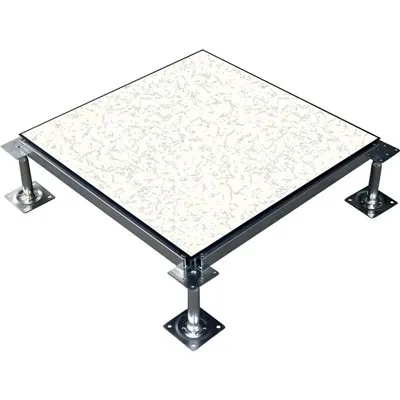
Steel Raised Acess Flooring Hey there, if you’re the type who’s deep in the raised access floor game (like we are—we’ve been supplying heavy-duty ones to warehouses, data centers, and industrial sites for years) you’ve probably stared at a scuffed, faded floor panel and thought: “Can I just paint this?” It makes total sense. Over time, even the toughest heavy-duty raised access floors take a beating—forklifts drag pallets, cable trays scrape edges, and constant foot traffic or heavy equipment rides leave marks that feel impossible to hide. And swapping out panels mid-project or mid-install is pricey, time-consuming, and a total hassle, right? So let’s cut through the noise and answer that real question: Can heavy-duty raised access floors actually be painted? Spoiler alert: Yes—but only if you do it right. Skip the random spray paint you have lying around the garage, because heavy-duty panels are built to handle way more abuse than a residential closet floor, and a bad paint job will peel, chip, or wear off in months (or weeks) if you don’t prep properly. Let’s break this down like we would for our regular clients, no corporate jargon or confusing tech terms. First, let’s get one thing straight: Not all raised access floors are the same. The heavy-duty ones we sell are usually made of two core types—steel core (for super high-load stuff, like data centers with server farms or warehouses moving 10k+ pallets a week) and concrete core (for even heavier static loads, like banks of industrial machinery or backup generator setups). The surface of these panels isn’t some raw, bare material—it’s finished with a thin factory coating, usually a baked-on powder coat or a sealant, designed to resist corrosion, spills, and that constant wear you’d see in commercial spaces. That factory coating is the first thing you have to deal with. If you try painting over it without prepping, the paint will just sit on top like a sticker and peel when something heavy bumps it. We’ve seen this happen a few times when clients jump in too fast—last year, a small warehouse client decided to touch up scuffs with generic acrylic spray paint, and within 6 weeks, chunks were flaking off where forklift wheels ran over them. Total waste of time and materials. So prepping is non-negotiable, and it’s not as hard as it sounds. Let’s walk through the steps we recommend for our own panels, because we test this stuff constantly to make sure our clients’ floors last. First step: Strip or sand the factory coating. For steel core panels, which have that hard powder coat finish, you’ll need to either sand the entire surface with a medium-grit sandpaper (80 to 120 grit is perfect—don’t go too fine or you won’t rough it up enough) or use a commercial-grade chemical stripper that’s safe for metal. If you use a stripper, make sure you rinse the panel thoroughly and let it dry completely for 24 hours—any leftover residue will mess with the paint adhesion. For concrete core panels, which usually have a smooth epoxy or sealant layer, sanding is the way to go (chemical strippers might react weirdly with concrete) because concrete is porous, and you need to create tiny scratches for the paint to grip into. Next step: Clean the absolute hell out of the panel. No, really—this isn’t a wipe-down with a paper towel. Use a degreaser that’s made for industrial surfaces, scrub every inch (including the edges and the underside of the panel—don’t forget those!), then rinse with clean water and let it dry for at least 48 hours. Even a tiny bit of dust or oil from your hands will make the paint fail. Once the panel is prepped, what kind of paint do you use? This is the part where a lot of people go wrong. Regular interior latex paint? Nah, that’s for bedrooms. For heavy-duty floors, you need an industrial-grade paint that’s designed for high-wear, high-load applications. We always recommend two types, depending on your panel material: Epoxy-based paint for steel core panels. Epoxy is tough as nails—resists chips, spills, and heavy traffic, which is exactly what our steel panels are built for. Make sure you get a 100% solids epoxy, not a watered-down version, because that’s the only one that will hold up to forklifts and constant equipment movement. For concrete core panels, a polyurethane-based paint is your best bet. It’s flexible enough to handle the slight expansion and contraction that concrete goes through with temperature changes, and it’s way more scratch-resistant than regular paint. Also, don’t forget the primer! We can’t stress this enough—primer acts like a glue between the panel surface and the paint. Skip it, and you’re asking for trouble. For steel, use a metal primer that’s compatible with epoxy. For concrete, use a concrete bonding primer to seal the porous surface and make sure the paint doesn’t sink in unevenly. Now, what about the application method? A lot of people think spraying paint is faster, but for raised access floors, we recommend a high-density roller or a brush for edges. Spraying can leave overspray on the edges of the panels (which you don’t want, since those edges lock into the floor grid) and it’s easy to miss spots. A roller gives you a smooth, even coat, and you can control where the paint goes. Apply two thin coats, not one thick one. Thick coats take forever to dry and are way more likely to peel or bubble. Let the first coat dry completely (check the paint can’s instructions—usually 2 to 4 hours, but err on the side of longer, especially if it’s humid) before adding the second. Wait, but what about common myths we hear? Like, “Paint will void the warranty if you’re still using our panels” or “Only new panels can be painted”? Let’s address those. First, warranty: Most of our heavy-duty raised access floor panels come with a 10-year warranty for factory finishes, but if you’re repainting them for a specific project, we don’t void the warranty—we just recommend that you use the correct prep and paint method, because we can’t guarantee a third-party paint job. Second, can you paint used panels? 100% yes! In fact, a lot of our clients who are renovating old facilities will take out their existing heavy-duty panels, sand and paint them, and reuse them instead of buying new ones. It’s a huge cost-saver—we’ve had clients save 60% on floor costs by doing that. One thing to note, though: If your panels have dents or deep gouges, you should fill those first with an industrial filler before sanding and painting. A little spackle-like filler (made for metal or concrete, depending on the panel) will smooth out the surface so the paint looks even. Now, let’s talk about when you should NOT paint your heavy-duty raised access floor. For example, if your panels are already at the end of their usable life—if they’re rusted all through the steel core, or the concrete core has big cracks that go all the way through, painting them is just a band-aid. They’ll still fail, and you’ll be wasting time and money on a paint job that won’t last. Another time: If you’re in a super high-moisture area, like a basement or a space that floods sometimes. Regular paint isn’t waterproof enough for that—you’d need a specialized waterproof coating, which is more like a sealant than paint. Wait, but what about the grid? The metal grid that the panels sit on—can you paint that too? Yep, same rules apply. Sand off the old coating, use a metal primer, and apply epoxy or polyurethane paint. Just make sure you don’t get paint on the edges of the panels where they lock into the grid—otherwise, they won’t slide in and out easily when you need to access cables or equipment underneath. We learned that the hard way a couple years ago when a client painted the grid and got paint on the panel edges, and they had to pry panels loose for a maintenance check. Lesson learned: Tape off the panel edges before painting the grid. Now, let’s get real about how long a properly done paint job will last. If you follow all the steps—good prep, correct paint, proper application—you’re looking at 5 to 7 years of heavy wear. That’s a huge win compared to a factory finish, which also lasts around 10 years, but it’s way more expensive to get a factory finish on used panels. A lot of our clients do touch-ups after 3 years, which is way easier and cheaper than replacing entire panels. So why do so many people think you can’t paint heavy-duty raised access floors? Because they skip the prep. We’ve seen people grab a can of interior paint and go at it, and that’s when the horror stories start. But when you treat it like the industrial surface it is, it works perfectly. If you’re someone who’s in the market for heavy-duty raised access floors, whether new or used, we always tell clients to keep repainting in mind as a cost-saving option. Maybe you’re setting up a new server room and want a custom color-coded floor (blue for server zones, green for access routes—super helpful for tech teams) instead of the standard gray. Painting lets you do that without spending extra on custom factory finishes. Or maybe you’re renovating an old warehouse and need to refresh the floor without breaking the bank. Either way, it’s doable. Wait, one last tip: If you’re painting panels that are already installed in the floor, don’t try to paint them in place. Remove each panel, take it to a well-ventilated area (paint fumes are no joke, especially industrial stuff), prep it, paint it, and let it dry completely before putting it back. Trying to paint over installed panels will leave drips and uneven coverage, and you’ll get paint on the edges of the grid and other panels. Trust us, we’ve been there. So to circle back to the original question: Can heavy-duty raised access floors be painted? Absolutely. It’s just not as simple as grabbing a can of paint from the hardware store. It takes the right prep, the right materials, and a little patience. If you do it right, you’ll get a floor that looks fresh, holds up to heavy use, and saves you a ton of money compared to replacing panels. If you’re thinking about painting your existing heavy-duty raised access floors, or if you’re in need of new panels for your next project, we’re here to help. We’ve spent years testing what works (and what doesn’t) for our clients’ industrial, data center, and warehouse spaces, so we can give you the tips and products that actually hold up. Just reach out to our team to talk through your project—we’ll walk you through the prep steps, recommend the right paint, or help you source high-quality heavy-duty raised access floors if you’re looking for new ones.
References
Industrial Floor Coatings: A Guide to Selection and Application, National Floor Covering Association
Raised Access Floor Design and Maintenance, Building Owners and Managers Association International
Heavy-Duty Metal Finishing Practices, American Society for Metals International Heavy Duty Raised Access Floor
Fineco Tech Co., Ltd.
As one of the most professional heavy duty raised access floor manufacturers and suppliers in China, we’re featured by quality products and good service. Welcome to wholesale customized heavy duty raised access floor made in China here from our factory. If you have any enquiry about cooperation, please feel free to email us.
Address: Wuyue Square, Wujin District, Changzhou, Jiangsu, China
E-mail: info@finecotech.com
WebSite: https://www.finecoglobal.com/
