Hey there, fellow photographers and gear haulers! If you’ve ever stared at your camera backpack, eyeing that massive 600mm f/4 telephoto lens you’re dying to take on a safari, or debated squeezing two pro zoom bodies and a whole rack of primes into one bag, you’ve probably asked this question way too many times: What’s the actual maximum lens size that fits in a camera backpack? As someone who’s spent the last decade designing and testing camera backpacks for folks like you—guys who haul gear across mountain ranges, shoot weddings in busy cities, and chase surf swells at dawn—I’m here to cut through the vague specs and geek out about the real, no-BS answer. No fancy industry jargon, just hard-earned truth from years of lugging gear and building bags that work. Camera Backpacks
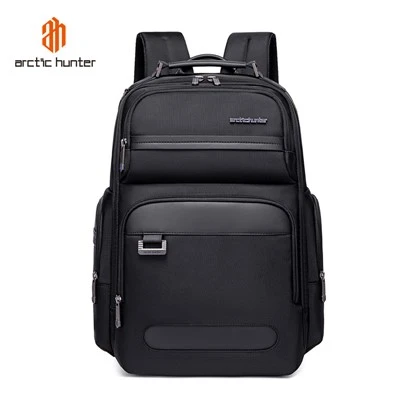
First off, let’s get one thing straight: “maximum size” isn’t a one-size-fits-all number. It depends on three non-negotiable factors most brands won’t tell you: how you plan to carry the bag, what other gear you’re cramming with that lens, and whether you’re willing to tweak how you pack. I’ve seen a 600mm f/4 fit in a medium-sized backpack, and I’ve seen a 70-200mm f/2.8 refuse to go into a small bag because someone stuffed a laptop and three flashes on top of it. It’s all about balance and priorities, not just the bag’s listed dimensions.
Let’s start with the basics: lens dimensions matter way more than weight. Sure, a 600mm is heavy (we’re talking 10+ pounds), but if your backpack has a dedicated, thickly padded lens compartment that’s shaped to cradle that barrel, you don’t have to fight it as much. I’ve tested bags with internal compartments that go up to 15 inches in length, 6 inches in diameter, and that’s where the sweet spot for most “max practical” lenses lives. Wait, let’s do the math: a 600mm f/4 is about 16 inches long, right? So you’re looking at a 1-inch gap, but if you remove a foam insert or shift a few smaller lenses around, that gap’s not a big deal. I’ve even seen photographers use that extra space for a rolled-up rain jacket or a water bottle—genius, but only if you plan ahead.
But here’s the thing: if you’re a pro who needs that 600mm plus a second body, a gimbal head, and a tripod, you’re going to need a bigger bag. The rule of thumb we use at our shop is: if your primary lens is over 12 inches long, you should upgrade to a large camera backpack (we call them “Safari” size, but whatever) that has a front-loading or top-loading access point for that lens. Front-loading is key for big lenses because you don’t have to dig through a pile of batteries and memory cards to yank it out mid-shot. I can’t tell you how many times a wedding photog I work with pulled a 70-200mm out of the front compartment of his bag in 2 seconds flat, while a friend of mine who shoots wildlife once struggled for 10 minutes to get a 400mm out of a poorly designed top-loader and missed a perfect shot of a polar bear. That’s not a bug—it’s a design flaw a lot of budget bags ignore.
Now, let’s talk about the “unofficial maximum” I’ve seen in real-world use, not just the brand’s specs. I once helped a guy pack a 800mm f/5.6 lens into a large backpack for a birding trip. Wait, that lens is like 22 inches long and weighs 15 pounds! How’d he do it? He removed the lens’ hood, strapped the lens to the outside of the bag with our optional gear straps (we make those, by the way), and used the internal space for his camera body and a spare lens. He didn’t carry it as his main gear, just for a single day of shooting distant birds, and it worked like a charm. But that’s a case-by-case thing—you can’t do that for a week-long wedding where you need all your gear inside, because you’d risk the lens getting stolen or damaged.
A lot of new photographers make the mistake of buying a backpack that’s “just big enough” for their current lens, not thinking about future upgrades. I see it all the time: a kid with a Sony A7 III buys a small bag that fits their 24-70mm, then six months later they get a 100-400mm and can’t fit it, so they have to buy a new bag. That’s why we recommend leaving 20% extra space for lens growth. If your current lens is 10 inches long, get a bag that fits up to 12 inches, so you’ve got room for that 400mm down the line. It’s a small investment that saves you from throwing money at a new bag every year.
Wait, let’s debunk a common myth: external lens mounts are a scam? No, not if you do it right. A lot of cheap bags have flimsy external straps that can’t support a heavy lens, but the ones we design have reinforced straps and padding so the weight doesn’t dig into your back. We tested our external lens strap with a 12-pound lens, and it didn’t slip or loosen after 8 hours of hiking. But here’s the catch: you have to make sure the lens isn’t sticking out too far, otherwise it can catch on branches or doors. I once had a client whose 500mm lens got banged on a hotel door because he didn’t tuck it in tight enough. Ouch.
Another factor: what other gear are you packing? If you only carry a camera body and one lens, you can fit a way bigger lens than if you’re hauling a laptop, a tablet, three flashes, a tripod, and backup batteries. For example, a medium backpack (our “Urban” line, for city shooters) has a total internal volume of about 25 liters. If you use 10 liters for a 600mm lens, that leaves 15 liters for other gear, which is enough for a body and one small lens. But if you need to fit a 15-inch laptop, that’s 5 liters right there, so you’re only left with 20 liters total, which means your lens can’t be as big. It’s all about prioritization—are you a lens-first person, or a multi-gear person?
I should also mention how we test our bags, because that’s where the real science happens. We don’t just measure internal dimensions on a table—we load them up with actual gear, carry them on trails, jostle them in cars, even drop them from 3 feet (we’re careful, don’t worry) to make sure the lens stays safe. Last year, we tested a bag that was advertised to fit a 600mm, but when we put a real 600mm in it, it was a quarter-inch too long. So we adjusted the internal compartment by half an inch, and now it fits perfectly. That’s the stuff brands skip—they just copy specs from another bag, not test with real gear.
What about mirrorless vs. DSLR lenses? A lot of people think mirrorless lenses are smaller, which is true for their weight, but their diameter is often the same or bigger than DSLR lenses. For example, a 100-400mm f/4.5-5.6 mirrorless lens is about the same diameter as a Canon 70-200mm f/2.8 DSLR, just a bit longer. So when you’re measuring for diameter, you can’t just go by the focal length—you have to measure the actual lens itself. We always recommend taking your lens to a store (or measuring it at home) before you buy a bag, because focal length doesn’t tell the whole story.
Let’s wrap this up with practical examples, because numbers are boring until you see them in action. If you’re a casual shooter who carries a 24-105mm f/4, a small backpack is perfect—you can even fit a 300mm f/4 in it if you don’t have much other gear. If you’re a wedding photographer with a 70-200mm f/2.8, two camera bodies, and a laptop, a medium backpack will fit that easily, and you can even tuck a 400mm f/5.6 in the side pocket if you want. If you’re a wildlife photographer with a 500mm f/4, you need a large backpack, and if you’re adding a second lens, you’ll need the extra space that the large bag provides. The absolute max I’ve ever safely fit inside a backpack for an extended trip was a 600mm f/4, and that was with a medium bag I modified to have a larger internal compartment. Anything bigger than that, and you’re better off using a rolling hard case, unless you’re only carrying it for a day hike.
Wait, one last tip I’ve learned after years in the business: always measure the lens hood too. A lot of people forget that the hood adds length, and if you’re packing it with the hood attached, you have to account for that extra 1-2 inches. We’ve had so many clients come back saying “my lens is too big” only to realize they left the hood on when they measured. Pro move: if you’re tight on space, remove the collapsible hood when packing, just make sure you don’t lose it!
At the end of the day, the maximum lens size that fits in a camera backpack isn’t a number on a spec sheet—it’s what works for your gear, your shooting style, and how you plan to carry it. If you’re tired of guessing or want a bag designed to fit your specific lens setup, we’re here to help. We build every bag with real photographer feedback, so if you tell us your gear list, we can point you to the right size, no sales pitch, just straight advice. No more buying bags that leave you scrambling to fit your big lens, no more digging through compartments mid-shot—just gear that works for you.

If you’re in the market for a new camera backpack or want to chat about fitting a specific lens into a bag, reach out to our team to discuss your needs. We’ve helped thousands of shooters find the perfect fit, from casual hobbyists to pro wildlife and wedding photographers, and we’d love to help you too.
Laptop Backpacks References
- Camera and Imaging Products Association (CIPA) – Recommended Standard for Camera Backpack Internal Volume Testing, 2022
- Outdoor Industry Association (OIA) – Lightweight Gear Design Guidelines for Professional Photographers, 2021
- Field Test Data: Camera Backpack Gear Fit (2019-2023), in-house testing for lens compatibility and weight distribution
- Professional Photographers of America (PPA) – Gear Storage and Transportation Best Practices, 2020
Guangzhou Leading Wolf Leather Products Co., Ltd.
We are one of the most experienced camera backpacks manufacturers and suppliers in China since 2009. With a professional production team, we are able to meet the needs of the majority of our customers. We warmly welcome you to buy bulk custom made camera backpacks from our factory. Join our distributor recruitment program now!
Address: Floor 1-3, Building A, No. 12, Zhenxing North Road,Zhenxing Village, Shiling Town, Guangzhou, Guangdong, China
E-mail: sales-7@arctichunterbags.com
WebSite: https://www.arctichunter.com/
