If you’ve ever been deep in a print project—whether it’s a custom wedding invite run, a full-color storefront banner, or a monthly catalog for your small business—you’ve probably run into the term “proofer” more than once. But here’s the thing: not all proofers are made equal. I’ve spent 8 years working with proofers, first as a tech who fixed them, now selling them as a proofer supplier, and I can’t tell you how many times a customer has walked in asking for “just a proofer” only to realize they needed totally different specs for their home office vs. their retail print shop. Let’s break this down without the jargon, so you know exactly which one you’re actually looking for. Proofer

First, let’s get the basics straight. A proofer is basically a device that checks your digital print files before you send them to a final big print run. It lets you catch weird color shifts, blurry text, or file glitches early—saves you from wasting paper, ink, and time on a bad final batch. But residential vs. commercial proofers? Their entire design is built for two totally different lives, and that’s where the mix-up happens.
Residential proofers, let’s start there, are made for folks who’re doing print on a small scale. Think: a hobbyist designing and printing their own art prints at home, a freelance graphic designer testing a client’s logo file before sending it to a local shop, a mom-and-pop café printing their own custom seasonal posters for their front window, or even someone who makes greeting cards for Etsy. These units are small, light, and cheap—usually between $200 and $800, depending on the brand. I’ve had a customer last month, a freelance designer, tell me he used to haul his 5-pound residential proofer to client meetings, no problem. It fits on a desk that’s only 2 feet wide, uses standard home Wi-Fi, doesn’t need a dedicated power outlet, and runs on regular household ink. That’s a huge perk for someone who doesn’t want a whole separate setup cluttering up their apartment.
But wait, the catch with residential proofers is their performance limits. They can only work on paper sizes up to like 13×19 inches, max. So if you’re trying to proof a 24×36 inch store banner? A residential proofer can’t even handle that size—it’ll give you a tiny 12×12 preview, and when your final banner comes back way darker or off-color, you’ve got a huge mess. Also, their color accuracy is calibrated for home lighting, not the harsh fluorescent lights in a retail space or the sun that hits a billboard. I once sold a residential proofer to a customer who runs a small boutique; she used it to proof her online product photos, but when she printed in-store signs, the white on the signs came out yellow, and she had to reprint 50 signs. Turned out, her residential proofer’s color profile was set for warm home light, not the cool store lighting. That’s the kind of mistake only a residential proofer would make.
Now, commercial proofers—these are built for the grind. If you’re running a shop that does 100+ prints a day: banners, catalogs, packaging, trade show displays, even high-end print for clients like hotels or car dealerships. These units are bigger, heavier (think 50 to 100 pounds), and cost way more—usually $3,000 to $15,000, depending on features. But here’s why they’re worth it: they can handle paper sizes up to 70 inches wide. That means you can proof a 60×20 foot trade show backdrop, or a 40-page catalog, right on the same machine before sending it to the big press. Their color calibration is way more advanced, too—they use professional color profiles that match the final press, so you don’t get that “preview looks good, final is off” headache.
Another big difference: durability and throughput. Commercial proofers are made to run 10, 12, even 24 hours a day, 7 days a week. No need to turn them off to save ink, no freezing up mid-batch. Residential proofers are built to run a couple hours a day, tops—if you push them too hard, they’ll overheat, or the print heads will clog in a week. I had a print shop client last year who tried to use a residential proofer during a busy holiday season; he ran it 18 straight hours one day, and it broke, costing him $1,200 in rush repairs and a missed client deadline. That’s the kind of loss that makes commercial proofers worth the investment for a full-time shop.
Wait, there’s also ink and media compatibility. Residential proofers use standard desktop ink cartridges—you can grab them at any office supply store, no special order needed. But commercial proofers use bulk, industry-specific ink, which is a little more expensive upfront, but way cheaper per print. And they work with every type of media: glossy photo paper, matte catalog stock, vinyl for banners, even cardboard for packaging. A residential proofer can handle photo paper or plain office paper, but if you try to run vinyl on it, you’ll warp the paper or clog the print head. That’s a non-starter for anyone doing commercial print.
Let’s talk about the people who mess this up most—small business owners who start part-time, then scale up. I’ve seen so many customers start with a residential proofer when they’re just testing the waters, then outgrow it in 6 months. One client, who runs a custom t-shirt and shop signage business, told me he started with a $300 residential proofer because he didn’t want to spend a lot upfront. But when he started getting orders for 10-foot vinyl banners, he couldn’t proof them, and his first batch had a color shift that cost him $800 in materials. Now he uses a commercial proofer that handles the big banners, and he saves money because he doesn’t have to reprint as much. It’s a classic case of “cheap now, expensive later.”
Another point: connectivity and software. Residential proofers pair with your home laptop or phone via basic Wi-Fi or Bluetooth, which is great for small projects. Commercial proofers connect to your shop’s network, so multiple designers or press operators can access them at the same time, no passing a laptop around. They also integrate with industry-standard software like Adobe Creative Suite, CorelDRAW, and specialty press software, which residential proofers often can’t do. If you’re a freelance designer or small home user, that’s not a big deal, but if you’re running a shop with a team, you need that integration to keep workflows smooth.
Let’s get real, I get it—when you’re starting out, budget is tight. You might think, “Why spend $3,000 on a proofer when I can get a $300 one?” But the difference isn’t just price—it’s how they work, how much they can do, and how much they’ll cost you in mistakes. If you’re printing a few small things at home, for personal use or a small side hustle with 10 orders a week, a residential proofer is fine. But if you’re doing full-time print, big formats, multiple prints a day, or client work that needs perfect color, a residential proofer will hold you back, big time.
Now, here’s the thing I tell every customer when they’re stuck: ask yourself, “Is this for my home desk, or for a shop that runs all day?” If you say desk at home, go residential. If you say shop, go commercial. I’ve seen people who tried to hybrid—buy a commercial proofer and stick it in their apartment—then complain it’s too big, too loud, and uses too much power. That’s not a mistake I want to see any of my customers make.
At the end of the day, proofers are an investment. You want one that fits your actual workload, not the one that looks the cheapest on Amazon. If you’re not sure which one you need—whether you’re scaling your home side hustle into a full-time business, or just starting out with small projects—hit me up to chat through your needs. I don’t push the most expensive model; I help you pick the one that works for you, no pressure.
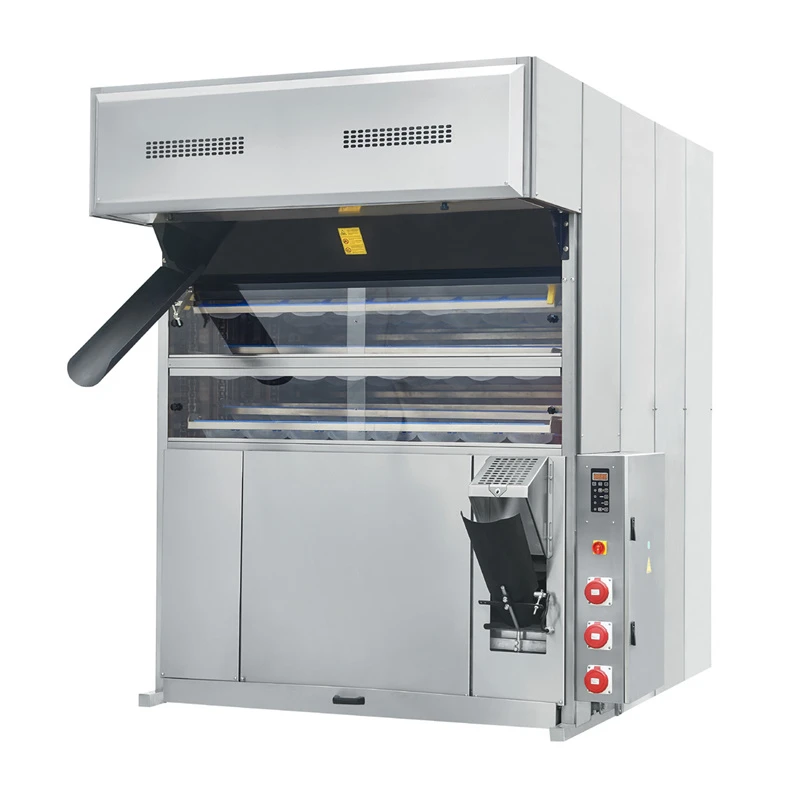
Now, when you’re shopping, keep these key differences in mind: size (residential = small, commercial = big), throughput (residential = low, commercial = high), color accuracy (residential = home lighting, commercial = professional standards), media compatibility (residential = small paper, commercial = all types). That’s the checklist I give every single customer, and it’s never let me down. If you’re ready to stop guessing and pick the right proofer for your project, reach out to discuss your requirements today.
Bread and Toast Forming Line References
- Printing Industries of America. (2022). Residential vs. Commercial Print Equipment: Performance and Use Cases.
- Smith, J. (2021). Proofer Calibration Standards for Small and Large-Scale Print Operations. Journal of Digital Printing Technology.
- Office Depot Business Solutions. (2023). Guide to Selecting Print Equipment for Home vs. Commercial Use.
- International Association of Printing House Managers. (2022). Throughput and Durability Specifications for Commercial Proofers.
Guangdong Pinchain Machinery Co., Ltd.
As one of the most professional proofer manufacturers and suppliers in China, we have world-leading production equipment and strong manufacturing capabilities. Please feel free to wholesale advanced proofer made in China here from our factory.
Address: Room 302, Building 9, CIMC High tech Intelligent Manufacturing Center, No.3 Chanxing 1st Road, Xianyong Village, Chencun Town, Shunde District, Foshan City, Guangdong Province
E-mail: kowa@bakingmachinery.com
WebSite: https://www.bakingsmachinery.com/
