When you’re in the market for die castings, whether you’re a small machinery designer ramping up production for the first time or an automotive engineering team looking to refine a component line, picking the right supplier can make or break your project. I’ve spent 12 years on the floor of a die casting shop, working directly with clients to fix misaligned parts, missed delivery windows, and costly quality missteps—so I’ve seen firsthand what happens when companies skip the due diligence here. Too often, buyers reach for the lowest quote first, only to end up reworking batches, dealing with inconsistent material properties, or waiting weeks for a shipment that never arrives. Choosing a die casting supplier isn’t just about price; it’s about matching their capabilities to your specific needs, and vetting every detail from their floor to their communication style. Let’s break down the factors I’ve learned to prioritize, straight from someone who’s lived both sides of the table: as a supplier, and as a consultant who’s helped dozens of companies fix bad supplier choices. Die Castings
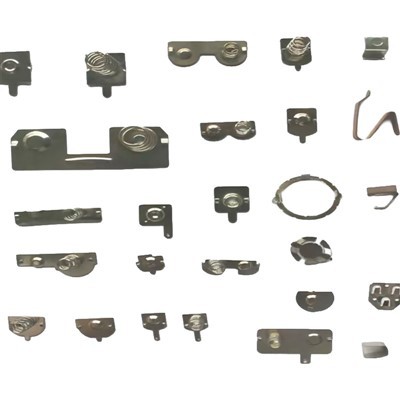
First, and often the most overlooked, is production capacity and equipment matching. A lot of suppliers will advertise that they can handle “small to large runs,” but don’t take that at face value. What size of die casting machines do they actually operate? For example, a small run of 1,000 aluminum housing components for a drone might only need a 500-ton machine, but a large automotive engine block die casting requires a 2,000-ton machine—if the supplier doesn’t have the tonnage or the specific machine type, they’ll either have to farm your job out to a third party, which adds delays and quality gaps, or turn you away entirely. On our shop floor, we keep machines ranging from 200-ton zinc die casting setups for small electronic connectors up to 2,500-ton aluminum machines for heavy industrial parts, and we post each machine’s capacity, maintenance schedule, and typical run volume on our internal client portal so buyers can check before they even send a quote request. That transparency isn’t common, but it’s non-negotiable: if a supplier can’t match your part’s required machine size, you’ll end up with parts that have inconsistent wall thickness, incomplete fill, or surface defects because the machine wasn’t designed for your component. Also, pay attention to their run volume limits: if you need 100,000 parts a month, a supplier that specializes in 1,000-part prototype runs will struggle to scale, often leading to missed deadlines that can derail your own product launch.
Next, material expertise and quality control protocols. Die castings rely heavily on the right material, and different alloys behave very differently under pressure. Zinc is common for small, intricate parts because it flows easily and has tight dimensional tolerance, while aluminum is lighter and more durable for automotive and aerospace components, and magnesium is used for high-strength, weight-sensitive applications like drones. But a supplier that works with all three doesn’t automatically know how to handle each one. For example, magnesium requires strict moisture control to prevent porosity, and if a shop cuts corners on drying the magnesium ingots, your parts will have hidden voids that fail stress tests down the line. That’s why our team has dedicated metallurgists who test every batch of incoming material, not just the final parts. We also follow ISO 9001 standards, which means every part goes through three quality checks: first, after the die casting press, to catch obvious defects; second, after trimming and finishing, to confirm dimensions; and third, a random sample of 5% of each run for tensile strength and hardness testing. What you should ask a potential supplier for is not just their quality certificate, but their process documentation: do they have SPC (Statistical Process Control) data for their runs? Do they track common defects like cold shuts, porosity, or flash, and share that data with clients? A lot of suppliers will say their quality is “top tier,” but when you ask for their defect rate over the past six months, if they can’t pull up a spreadsheet showing that rate is below 0.5% for your alloy, that’s a red flag. I’ve seen a client lose a $2 million contract because their first shipment of die castings from a supplier with no material testing had 12% porosity, leading to parts failing during crash tests. Don’t let that be you.
Lead time flexibility and reliability. In the manufacturing world, lead time isn’t just a number on a quote—it’s critical for your supply chain. If you’re launching a new product, a two-week delay from your die casting supplier can push your entire market launch back by a month, costing you sales. But not all lead times are created equal. A supplier that quotes a 4-week lead time might have that as a “best case” that only works if their schedule is completely open, while another might build buffer time for your order. Here’s a key question to ask: do they have spare capacity, or is their shop booked solid for the next three months? On our end, we reserve 15% of our monthly machine capacity for urgent orders, because we know that sometimes a client’s part breaks during a test run and they need a replacement in 48 hours. But if a supplier says they can’t accept any last-minute changes or urgent orders, that’s a problem. Also, check their delivery track record: if they’re consistently late by 2-3 days per shipment, that might not sound like much, but over a year, that adds up to two weeks of delays. One way to vet this is to ask for references from clients who’ve ordered both prototype runs and full production runs. A good supplier will have a portfolio of references that can speak to both their quality and their timeliness. For small prototype runs, you might be willing to wait a bit longer, but for full production, you need a supplier who can commit to consistent lead times without cutting corners on quality to speed up delivery.
Die design and tooling capabilities. The die (the mold that shapes the casting) is the heart of the die casting process, and if the die is poorly designed, even the best machine and material won’t produce good parts. A lot of buyers assume that the supplier will just use the CAD file you send to build the die, but that’s not always the case. A skilled die casting supplier will offer input on die design to make your part easier to cast, cheaper to produce, and less likely to have defects. For example, a part that has a thin, complex feature might be redesigned by a supplier’s tooling team to have a slight draft angle, which reduces the chance of the part sticking in the die and causes fewer surface defects. If a supplier says they don’t have in-house die design or tooling, that means they’ll outsource it, leading to higher costs, longer lead times, and less control over the final product. On our shop, we have a full tooling team with CAD/CAM software that designs and builds our own dies in-house, which means we can make adjustments mid-process if a run has a defect, rather than waiting for an outside tooling company to make changes. This is especially important for high-complexity parts, like aerospace components or medical devices, where even a small design flaw in the die can lead to thousands of bad parts. Always ask: do you handle die design and tooling in-house, or do you outsource? If they outsource, can they share examples of past die modifications they’ve requested to improve part quality? That’s a sign of a supplier that cares about your long-term success, not just one-off sales.
Communication and transparency. I’ve worked with suppliers who will go silent for two weeks after you send a quote request, only to send a quote that’s way higher than expected, and others who will update you at every step: when your die is being designed, when your first sample is ready, when the shipment is on its way. Die casting is a process that has a lot of moving parts, and problems will arise—maybe a machine breaks down, maybe a batch of material is slightly off. How a supplier communicates about those problems tells you everything. A good supplier will proactively tell you about delays, explain why they’re happening, and offer solutions to minimize the impact on your schedule. A bad supplier will hide delays, hoping they can fix it without you noticing, and end up delivering late. That’s why, when you’re vetting a supplier, pay attention to their responsiveness during the initial quote process: if it takes them more than two business days to reply to your first email, that’s a sign of their overall communication style. On our end, we assign a dedicated account manager to every client, so you don’t have to wait for a general reply—you can reach out to the same person every time, and they’ll have all the details of your order on hand. We also send monthly updates on production progress, photos of sample parts, and tracking numbers as soon as the shipment leaves our shop. For buyers, this transparency is just as important as quality and price, because it reduces the risk of surprises down the line.
Cost structure and hidden fees. Price is obviously a factor, but the lowest quote almost never includes all costs. A lot of suppliers will quote a low price for the parts, but add hidden fees for die changes, rush orders, or shipping, which can add 20-30% to the total cost. Others will offer a low initial price to win the job, then raise prices mid-run because of material cost increases. That’s why you need to ask for a full breakdown of all costs: what’s included in the quote, and what extra fees you might face. For example, our quote includes die setup, material costs, labor, and shipping within the contiguous U.S., with no hidden fees for standard runs. We also lock in material prices for 6 months for production orders, so you don’t have to worry about unexpected hikes in aluminum or zinc prices. A good supplier will be upfront about their cost structure, not just the per-part price. Always compare apples to apples: if Supplier A quotes $1 per part with a $500 die setup fee, and Supplier B quotes $1.10 per part with free die setup, the lower overall cost for a 10,000-part run is actually Supplier B. Don’t let the per-part number trick you.
Finally, industry-specific experience. If you’re in a regulated industry like medical, automotive, or aerospace, your die castings have to meet specific standards. Medical parts, for example, need to be made with materials that are biocompatible, and have zero porosity that could harbor bacteria. Automotive parts have to meet crash test standards, which means their tensile strength and dimensional tolerance are non-negotiable. A supplier that works with toy parts won’t have the experience or certifications to meet your industry’s requirements, even if they can make the part. On our shop, we specialize in automotive and industrial components, which means we’re familiar with IATF 16949 standards for automotive, and we have traceability for every batch of material, which is required for aerospace clients. We also work with medical device companies that need parts with tight tolerances and non-porous surfaces, so our team has experience running tests for biocompatibility. If you’re in a regulated industry, always ask for proof of industry-specific certifications, and for references from other clients in your sector. That way, you know the supplier understands the unique requirements of your parts, and won’t cut corners to meet your cost or timeline.
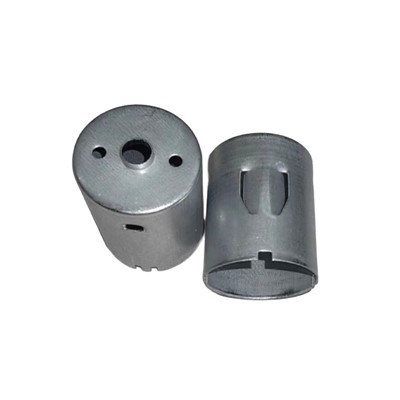
At the end of the day, choosing a die casting supplier is a partnership, not just a transaction. You want someone who will be there when you have a prototype question, when a run has a defect, or when you need to scale up production. I’ve seen companies that settled for the lowest quote end up spending twice as much reworking parts, and others that took the time to vet their supplier and built a long-term relationship that saved them time and money over years. If you’re ready to talk through your die casting needs, we’re here to walk through every detail—from machine capacity to quality protocols, to make sure we’re the right fit for your project.
Automotive Stamping Part References
- American Die Casting Institute. (2022). Die Casting: A Manufacturer’s Guide to Process, Quality, and Compliance.
- International Organization for Standardization. (2015). ISO 9001:2015 Quality Management Systems Requirements.
- Automotive Industry Action Group. (2021). IATF 16949:2016 Standard for Automotive Quality Management Systems.
- The Fabricator. (2023). “Key Considerations for Selecting a Die Casting Supplier” – Industry Best Practices Report.
Yuyao Aozhou Metal Products Co., Ltd.
We are one of the most experienced die castings manufacturers and suppliers in China. With a professional production team, we are able to meet the needs of the majority of our customers. Please rest assured to buy customized die castings made in China here from our factory.
Address: No.6, Nanbailonggang, Wuma Industrial Zone, Lubu Town, Yuyao City
E-mail: xqr-2316@163.com
WebSite: https://www.cnaozhou.com/
