If you’ve ever worked on a construction site, a car engine, or even put together a backyard deck, you’ve used a hex bolt. They’re everywhere, and as a hex bolt supplier, I can tell you most folks don’t stop to think about how these little fasteners make sure whatever you’re building doesn’t fall apart. But here’s the thing: bad hex bolts aren’t just an inconvenience—they’re a safety risk. That’s why quality control (QC) standards aren’t just something we follow to check a box; they’re the backbone of what we do to keep our customers coming back and the projects they work on solid. Hex Bolt
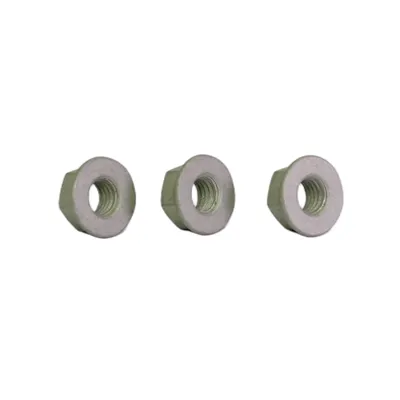
Let me start with the basics. When someone orders hex bolts from us, they’re not just buying a piece of metal with six sides. They’re buying a part that has to fit exactly, hold up under pressure, and not break when tightened. So where does the QC process start? It begins long before the first bolt is even stamped. We source our raw steel from certified mills, right? But that’s just the start. We test every batch to make sure it has the right chemical composition—like carbon content, manganese, and phosphorus. Too much carbon, and the bolt gets too brittle; too little, and it’s too soft. That’s a quick test with a spectrometer, and if a batch doesn’t pass, it’s sent back immediately. No exceptions. I once had a supplier try to slip a batch with off carbon levels past us, and we caught it before it even hit the production line. Saved our customer from a whole lot of trouble later.
Next up is the forging stage. Most hex bolts are made by heating steel rods and stamping them into shape, right? During forging, the metal grains have to align properly so the bolt can handle tension and shear. That means we use non-destructive testing (NDT) here, like ultrasonic testing, to check for internal flaws. No one wants a bolt that looks perfect on the outside but has tiny cracks inside that will pop when someone uses a wrench to tighten it. We also check the heat treatment after forging. Tempering and quenching are key to getting the right hardness. A lot of new suppliers cut corners here, but we test each heat-treated batch with a Rockwell hardness tester. The sweet spot for most general-purpose hex bolts is around HRC 32 to 36—hard enough to hold, but not so hard that it snaps when torqued. I’ve seen bolts that were too hard break during installation, and that’s a nightmare for anyone building something structural.
Now, the part that everyone notices: the hex head and threads. The head has to have the exact width across flats—if it’s too small, a wrench will slip; too big, it won’t fit the tooling on their equipment. We use go/no-go gauges for that, and every hour, we pull a sample off the line to check. The threads are even more critical. They have to be uniform in pitch and depth, and free of burrs or stripped spots. We use thread gauges to check both the major and minor diameters, and we run a visual inspection too. Even a tiny burr on a thread can cause the bolt to cross-thread, which ruins the nut and the bolt. Cross-threaded fasteners are a common complaint in the industry, and it’s totally avoidable with consistent QC. I’ve had customers tell me they used cheaper bolts before and ended up with a bin full of cross-threaded ones—now they only work with us because our threads fit every time.
Surface finish is another area that’s easy to overlook, but super important. Some hex bolts are used outdoors, so they need corrosion resistance. We offer zinc plating, hot-dip galvanizing, and plain carbon steel, but no matter the finish, it has to be uniform. A bad plating job can have spots where the metal is exposed, leading to rust in a matter of months. We do salt spray tests on every finish batch—usually 48 hours for zinc-plated bolts, 500 hours for galvanized ones—to make sure they don’t corrode too fast. We also check for surface defects like scratches or seams. A scratch might seem minor, but it can weaken the bolt’s structure, especially when it’s under load. Any bolt with a visible surface defect gets scrapped, no exceptions. We don’t send out anything we wouldn’t use on our own house.
Wait, let’s talk about tolerance. Hex bolts have to fit into standard nuts, right? If your bolt is a 1/2-inch-13, it can’t be 0.501 inches or 0.499 inches—nuts won’t engage properly. We follow ISO and ASTM standards here, specifically ASTM A307 for general carbon steel bolts and ASTM A325 for structural bolts. Those standards dictate the exact tolerances for diameter, length, and thread pitch. We use coordinate measuring machines (CMM) to check dimensions, which is way more accurate than manual calipers. A lot of suppliers rely on calipers, but human error happens—our CMMs catch even the smallest deviations. Length is another thing: if a bolt is supposed to be 2 inches long, it can’t be 1.98 or 2.02 inches because it’ll either be too short to reach the nut or too long, sticking out where it could catch on something.
Packaging is part of QC too, believe it or not. When we ship bolts, they can get banged around in the truck. We use sturdy boxes with dividers to keep bolts from scratching each other, and we label every package with the size, grade, and batch number. If a customer has an issue with a batch, we can trace it right back to the mill and production run. No more “we don’t know where these came from” mess. We also do random weight checks to make sure the box has the number of bolts it’s supposed to. It’s not unheard of for a cheap supplier to short their packages, so we make sure every order is exact.
As a hex bolt supplier, I know that trust is everything. Our customers don’t just need bolts—they need bolts they can count on. I’ve worked with construction crews who need bolts that won’t fail on a skyscraper, and small business owners who need bolts to hold up garden equipment. For each of them, our QC process is the reason they come back. Last year, a customer told me that on a job site, a batch of cheap bolts they’d used snapped during a high wind, delaying the project and costing them thousands. They switched to us, and now they’re one of our biggest repeat clients. That’s when I know all the late nights checking batches and fixing small issues are worth it.
Now, I’m not perfect. We’ve had a few minor issues over the years—nothing major, just a batch that was a little off on thread pitch, and we caught it before shipping. But we own our mistakes. If a customer gets a batch that doesn’t meet their standards, we replace it, no questions asked, and we figure out where we went wrong so it doesn’t happen again. That’s part of QC too: continuous improvement. We bring in our team every quarter to go over feedback from customers, tweak our testing processes, and make sure we’re staying ahead of industry changes.
So why do all these standards matter? Let’s break it down. Hex bolts are used in everything from furniture to bridges, and each application has different requirements. A bolt for a deck doesn’t need the same strength as a bolt for a wind turbine, but both need to meet specific QC benchmarks to be safe. ISO and ASTM set these standards for a reason—they’re based on decades of testing and real-world use. Cutting corners on QC might save a supplier a few bucks in the short term, but it costs customers way more in the long run. Broken bolts mean damaged materials, delayed projects, and even safety hazards.
As someone who’s been in this game for over 10 years, I can tell you that the best hex bolts aren’t the cheapest ones—they’re the ones you don’t have to think about. The ones that go in smoothly, hold tight, and don’t cause a problem weeks later. That’s what our QC process is designed to deliver. We don’t just check bolts at the end of the line; we check every step, because quality isn’t a one-time thing—it’s a habit.
If you’re a contractor, a manufacturer, or anyone who needs reliable hex bolts, don’t settle for the cheapest option out there. Quality matters, and as a supplier who cares about their reputation, we make sure every bolt leaves our facility up to par. Whether you need a small order for a home project or a bulk shipment for a big job, we’ve got you covered.

If you’re ready to chat about your hex bolt needs, hit us up. We can walk through exactly what we offer, how our QC process works, and make sure you get the right bolts for your project. No jargon, no hidden fees—just straight talk and reliable fasteners.
Carbon Rods References:
- ASTM International. (2021). Standard Specification for Carbon Steel Bolts, Studs, and Threaded Rod, 60,000 psi Tensile Strength (ASTM A307).
- International Organization for Standardization. (2019). Hexagon Bolts, Screws and Studs with Metric Fine Threads—Part 1: Product Grade A (ISO 898-1).
- NDT Resource Center. (2020). Ultrasonic Testing for Flaw Detection.
- Galvanizing Industries Association. (2022). Salt Spray Testing for Corrosion Resistance of Fasteners.
Jiaxing Jinling Hardware Technolgy Joint Stock Co., Ltd.
As one of the most experienced hex bolt manufacturers and suppliers in China, we also support customized service. Please feel free to buy bulk high-grade hex bolt made in China here from our factory. For quotation and price list, contact us now.
Address: No.32, Shenjiadai, Xuyouche Village, Qinshan Subdistrict, Haiyan County, Zhejiang Province, China
E-mail: jlzxl@jinlingfstn.com
WebSite: https://www.china-nut-factory.com/
